





Contents
3D Printed Food: The Future of Dinner?
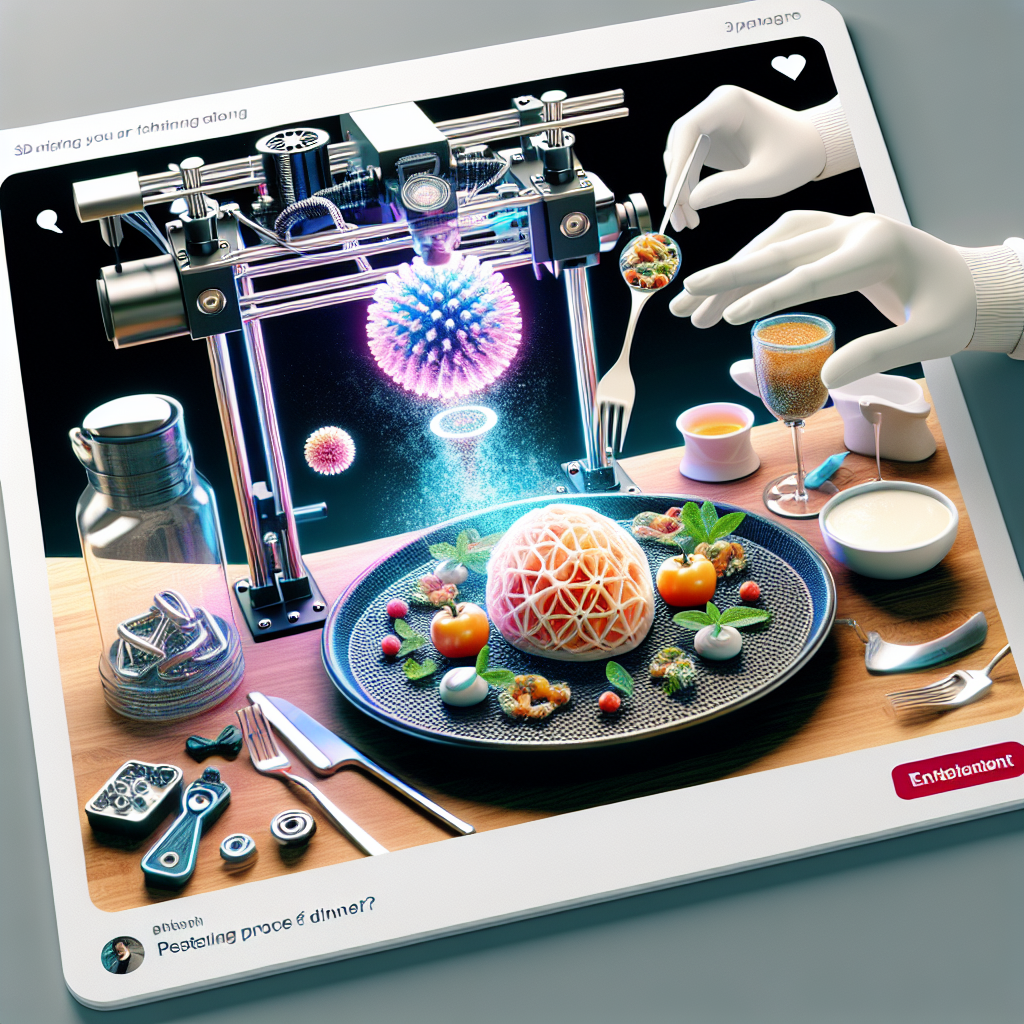
3D printing technology has revolutionized various industries, from manufacturing to healthcare. But have you ever thought about 3D printed food becoming the future of dinner?
Imagine being able to create customized meals with just the click of a button. With 3D printed food, chefs and home cooks alike can experiment with different flavors, textures, and shapes that were previously impossible to achieve. This innovative technology opens up endless possibilities for culinary creativity.
Not only does 3D printed food offer a new level of convenience and customization, but it also has the potential to address issues such as food waste and sustainability. By precisely controlling the ingredients and portions used in each dish, 3D printed food could help reduce food waste and promote more sustainable eating practices.
While 3D printed food is still in its early stages, many experts believe that it could revolutionize the way we eat in the future. As technology continues to advance, it’s exciting to think about the endless possibilities that 3D printed food could bring to our dinner tables.
Introduction
With the advancement of technology, 3D printing has become a reality in various industries. One of the latest innovations in this field is 3D printed food. This emerging trend raises the question – is 3D printed food the future of dinner? Let’s dive into this exciting topic and explore the possibilities.
What is 3D Printed Food?
3D printed food is exactly what it sounds like – food that is created using a 3D printer. Instead of traditional cooking methods, such as baking or frying, 3D printed food is produced layer by layer using a combination of edible ingredients. This technology allows for precision and customization in the creation of food items.
How Does it Work?
3D food printers work by depositing layers of edible materials, such as pureed vegetables, meats, or chocolates, in a specific pattern to build the desired food item. The printer follows a digital recipe or design, allowing for intricate shapes and textures to be created with ease.
Potential Benefits of 3D Printed Food
There are several potential benefits of 3D printed food, including:
- Customization: Food can be tailored to individual preferences, dietary restrictions, and nutritional needs.
- Efficiency: 3D printing can streamline the food production process, reducing waste and increasing speed.
- Sustainability: With the ability to use alternative ingredients and reduce food waste, 3D printed food has the potential to be more environmentally friendly.
Challenges and Limitations
While 3D printed food holds promise, there are also challenges and limitations to consider:
- Taste and Texture: Some critics argue that 3D printed food may not match the taste and texture of traditionally prepared dishes.
- Cultural Acceptance: Acceptance of 3D printed food may vary across different cultures and traditions.
- Cost: The initial investment in a 3D food printer and the cost of edible materials may be prohibitive for some consumers.
Conclusion
As technology continues to evolve, 3D printed food offers a glimpse into the future of food production. While there are challenges to overcome, the potential benefits of customization, efficiency, and sustainability make 3D printed food an intriguing prospect for the future of dinner.
Learn more about 3D printed food here.

The Future of Food: 3D Printing
3D printing technology has revolutionized various industries, including healthcare, automotive, and even fashion. But one field that has been gaining traction in recent years is 3D printed food. This innovative technology allows for the creation of edible creations using a process known as additive manufacturing. But is 3D printed food a reality or just science fiction?
Current State of 3D Printed Food
While 3D printed food may sound like something out of a sci-fi movie, the technology is already being used in various applications. Chefs and culinary experts are experimenting with 3D printers to create intricate designs and custom shapes for their dishes. Companies like Food Ink have even created pop-up restaurants where all the food is 3D printed.
Challenges and Limitations
Despite the advancements in 3D printed food, there are still several challenges that need to be addressed before it becomes mainstream. One of the main concerns is the taste and texture of 3D printed food. Currently, most 3D printed food items lack the traditional flavors and mouthfeel that consumers expect.
Another limitation is the cost and accessibility of 3D printing technology. While the technology is becoming more affordable, it is still out of reach for many individuals and small businesses. Additionally, there are concerns about the sustainability of 3D printed food and its environmental impact.
Despite these challenges, the potential for 3D printed food is vast. It has the ability to cater to individuals with specific dietary needs, reduce food waste, and even address global food scarcity issues. As technology continues to evolve, we may soon see 3D printed food become a common sight in kitchens and restaurants around the world.
For more information on 3D printing technology, visit Wikipedia.

FAQs about 3D Printed Food: The Future of Dinner?
What is 3D printed food?
3D printed food is a form of food manufacturing where ingredients are deposited layer by layer to create a three-dimensional edible product. This process allows for intricate and customizable designs that can be difficult to achieve through traditional cooking methods.
How does 3D printed food work?
3D printed food uses a special type of printer that is loaded with edible ingredients. The printer follows a digital design file to extrude the ingredients in a precise manner, layer by layer, to create the final food product. The printer can create a wide range of shapes and textures, offering endless possibilities for culinary creativity.
What are the benefits of 3D printed food?
Some of the benefits of 3D printed food include:
- Customizability: 3D printed food allows for personalized shapes, textures, and flavors.
- Efficiency: The manufacturing process is streamlined and reduces food waste.
- Nutritional control: Ingredients can be carefully selected and portioned for optimal nutrition.
- Sustainability: 3D printing can use alternative ingredients and reduce environmental impact.
- Culinary innovation: Chefs and food scientists can experiment with new recipes and techniques.
Is 3D printed food safe to eat?
While the technology is still relatively new, researchers and food safety experts are working to ensure that 3D printed food is safe for consumption. It is important to use high-quality ingredients and follow proper food handling guidelines when preparing 3D printed food. As the technology advances, safety standards and regulations are likely to become more stringent.

Customizable Meals
- 3D printing allows for personalized nutrition tailored to individual needs.
- Ingredients can be carefully selected to meet dietary restrictions or preferences.
Sustainability
- Reduced food waste as ingredients can be precisely measured and used efficiently.
- Production process can be optimized to minimize environmental impact.
Innovation in Culinary Arts
- Chefs can experiment with new textures, flavors, and shapes not possible with traditional cooking methods.
- Opens doors for creative and artistic presentations of food.





