Contents
Introduction:
When it comes to cheese, two popular options that often find themselves head-to-head are Cheddar and Gouda. Both cheeses have unique characteristics that set them apart, from their flavor profiles to their textures and optimal uses. Let’s take a closer look at how these two cheeses compare in terms of flavor, texture, and uses.
Flavor Profile
Cheddar and Gouda are two popular types of cheese that differ greatly in flavor. Cheddar is known for its rich, sharp taste, while Gouda has a milder and nuttier flavor profile. Cheddar is often described as tangy and savory, with a slightly crumbly texture. Gouda, on the other hand, has a smooth and creamy texture with a sweet and buttery taste.
Cheddar
Cheddar cheese is aged longer than Gouda, which contributes to its stronger and more distinct flavor. The aging process allows the cheese to develop complex flavors, ranging from sharp and tangy to sweet and nutty.
Gouda
Gouda cheese is known for its creamy texture and mild flavor, making it a versatile option for various dishes. It pairs well with a wide range of ingredients and can be enjoyed on its own as a snack or appetizer.
Texture
In terms of texture, Cheddar and Gouda also differ significantly. Cheddar cheese is crumbly and firm, while Gouda has a softer and smoother texture. The texture of Cheddar makes it ideal for grating and melting, while Gouda is best enjoyed sliced or cubed.
Uses
Both Cheddar and Gouda cheese are versatile ingredients that can be used in a variety of dishes. Cheddar is commonly used in dishes like mac and cheese, grilled cheese sandwiches, and cheeseburgers. Its bold flavor and melting properties make it a popular choice for adding richness to dishes.
Gouda cheese, on the other hand, is often used in dishes that require a mild and creamy cheese. It pairs well with fruits, nuts, and charcuterie, making it a great addition to cheese boards and appetizer platters. Gouda can also be melted over dishes like sandwiches and pasta for a creamy and flavorful topping.
Overall, both Cheddar and Gouda cheese offer unique flavors, textures, and uses in cooking. Whether you prefer the sharpness of Cheddar or the creaminess of Gouda, these cheeses are versatile options for adding flavor and richness to your dishes.
For more information on Cheddar and Gouda cheese, check out Cheese.com.

Frequently Asked Questions
1. What are the flavor differences between Cheddar and Gouda?
Cheddar cheese typically has a sharper and more pronounced flavor compared to Gouda, which is known for its mild and buttery taste. Cheddar also has a slightly tangy and sharp flavor, while Gouda has a creamy and nutty taste.
2. How do the textures of Cheddar and Gouda differ?
Cheddar cheese is usually firmer and crumblier in texture, while Gouda is softer and smoother. Cheddar can be easily grated or sliced, while Gouda is often used in melted form for dishes like sandwiches and quesadillas.
3. What are some common uses for Cheddar and Gouda cheeses?
Cheddar cheese is commonly used in dishes like mac and cheese, grilled cheese sandwiches, and as a topping for burgers and salads. Gouda is often used in dishes like fondue, cheese boards, and as a filling for sandwiches and wraps.

Difference between Cheddar and Gouda Cheese
When it comes to choosing between cheddar and gouda cheese, there are several factors to consider.
Flavor
Cheddar cheese is known for its sharp and tangy flavor, while gouda cheese has a milder and nuttier taste.
Texture
Cheddar cheese is typically crumbly and creamy, while gouda cheese has a smoother and softer texture.
Color
Cheddar cheese is orange in color, which is often due to the addition of annatto, while gouda cheese is a pale yellow hue.
For more information on the differences between cheddar and gouda cheese, you can visit this Wikipedia page.

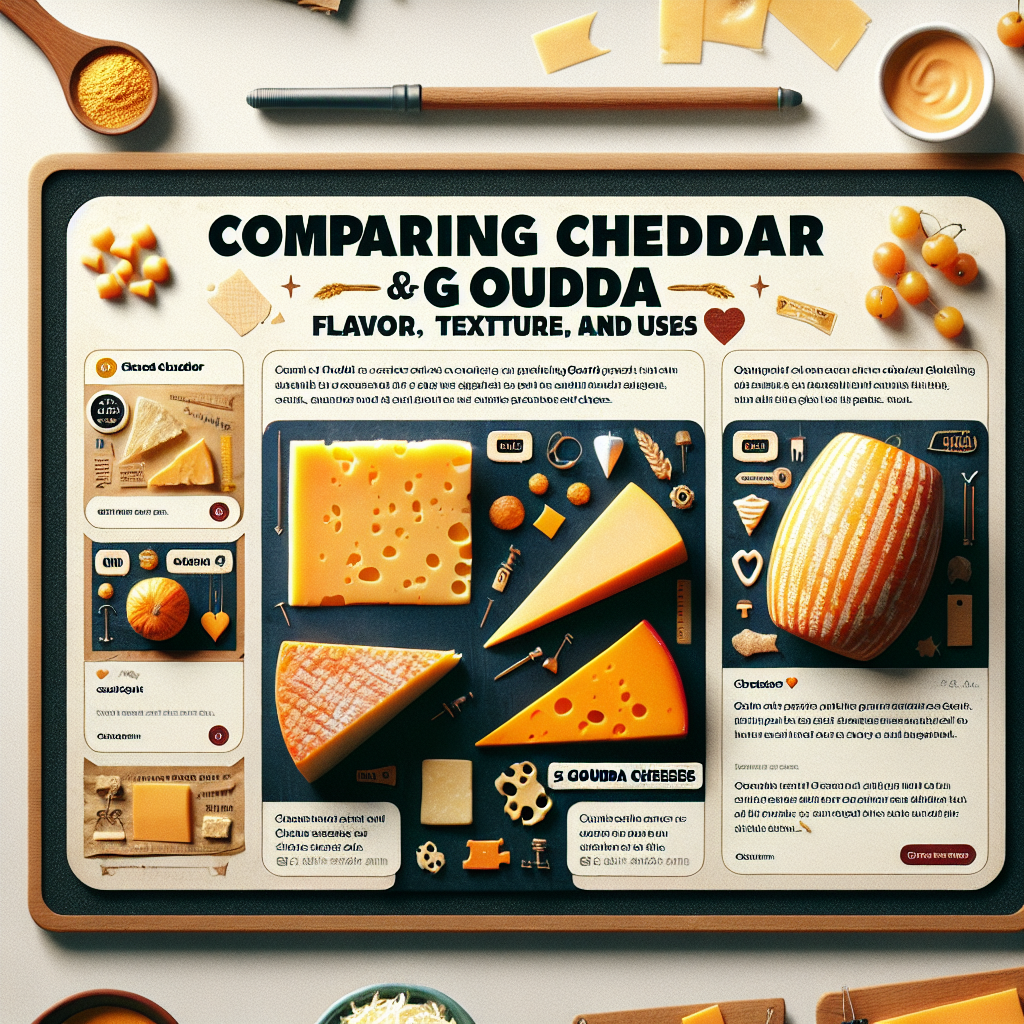
Comparing Cheddar and Gouda: Flavor, Texture, and Uses
- Cheddar:
- Flavor: Sharp, tangy, and nutty
- Texture: Firm and crumbly
- Uses: Ideal for melting, sauces, and sandwiches
- Gouda:
- Flavor: Mild and creamy
- Texture: Smooth and supple
- Uses: Great for snacking, slicing, and pairing with fruits