




Contents
The Science Behind Reverse Osmosis Systems – How Does it Work?
Reverse osmosis (RO) systems are widely used to purify water by removing impurities. Understanding the scientific principles behind RO is essential to comprehend how it works.
Reverse osmosis utilizes a semi-permeable membrane that only allows water molecules to pass through, while filtering out a wide range of impurities, including salts, chemicals, and pollutants. To achieve this, high pressure is applied to the water, forcing it to move in the opposite direction of what would occur naturally.
By pushing the water against the membrane, osmotic pressure is overcome, and the concentration of impurities is gradually reduced. The remaining liquid that passes through the membrane ends up as purified water, leaving behind all the contaminants rejected by the membrane.
This process, known as reverse osmosis, ensures that the final product is clean, crisp, and safe to drink. It is commonly used in both residential and commercial settings, where clean water is of utmost importance.
The key benefits of reverse osmosis systems include:
- Removal of impurities: Reverse osmosis effectively eliminates impurities such as salts, heavy metals, bacteria, and viruses.
- Improved taste and odor: Through the removal of contaminants, reverse osmosis significantly improves the taste and odor of water, making it more enjoyable to consume.
- Healthier option: Reverse osmosis provides a healthier water source, particularly for individuals with compromised immune systems or specific health conditions that require clean water consumption.
- Environmental friendliness: By using reverse osmosis systems, there is a reduced need for single-use plastic bottles and other wasteful methods of obtaining clean water, leading to a more sustainable and eco-friendly solution.
Understanding the science behind reverse osmosis systems allows us to appreciate the technology’s ability to provide clean and safe drinking water, ultimately benefiting both our health and the environment.

💧 = Use the coupon code SALEG3P800 to save $150 OFF on the 800GPD Tankless RO System with UV Sterilizing Light – Waterdrop G3P800 = 💧
The Science Behind Reverse Osmosis Systems – How Does it Work?
Overview of Reverse Osmosis
Reverse osmosis (RO) is a water purification process that uses a semipermeable membrane to remove impurities from water. It is widely used in the production of purified drinking water and industrial water treatment. Let’s delve deeper into the science behind reverse osmosis systems and understand how they work.
Understanding Osmosis
Before we explore reverse osmosis, it’s important to grasp the concept of osmosis. Osmosis is the natural process by which a solvent, such as water, moves from an area of low solute concentration (dilute solution) to an area of high solute concentration (concentrated solution) across a semipermeable membrane. This movement continues until equilibrium is achieved.
Reverse Osmosis Process
Reverse osmosis systems work by applying external pressure greater than the osmotic pressure to reverse the natural direction of osmosis. This forces the solvent, which is typically water, to move from the concentrated solution side to the dilute solution side, leaving behind the impurities.
Let’s walk through the steps involved in a reverse osmosis process:
1. Pre-Filtration
Prior to entering the reverse osmosis membrane, the water goes through pre-filtration to remove larger particles such as sediments, debris, and chlorine. This step helps protect the reverse osmosis membrane and ensures better water quality.
2. Pressure Application
The pre-filtered water is then pressurized using an external pump. The applied pressure must exceed the osmotic pressure of the concentrated solution, typically achieved by maintaining the concentrated side of the membrane at a higher pressure than the dilute side.
3. Separation through Semipermeable Membrane
The pressurized water passes through a semipermeable membrane with extremely small pores. This membrane selectively allows water molecules to pass while blocking the passage of impurities, such as dissolved minerals, organic compounds, and bacteria. The filtered water is known as the permeate.
4. Concentrate Disposal
As the water molecules traverse the semipermeable membrane, the impurities and concentrated solution are left behind. This concentrated solution, enriched with the removed impurities, is referred to as the concentrate or reject stream. It is important to dispose of this stream properly to prevent any environmental contamination.
Benefits of Reverse Osmosis Systems
Reverse osmosis systems offer several key benefits:
- Highly Efficient Filtration: Reverse osmosis can remove up to 99% of impurities, including minerals, heavy metals, and pathogens.
- Improved Taste and Odor: The filtration process enhances the taste and odor of the water, providing a refreshing and clean drinking experience.
- Cost-effective: Having a reverse osmosis system at home can eliminate the need for purchasing bottled water, saving both money and the environment.
- Versatile Applications: Reverse osmosis is used in various industries, including pharmaceuticals, food and beverage production, and desalination.
Conclusion
Reverse osmosis systems operate based on the principles of osmosis, utilizing a semipermeable membrane to separate impurities from water. This science-driven process offers efficient and reliable water purification for both domestic and industrial purposes. By understanding the science behind reverse osmosis, we can appreciate the importance and benefits of this technology.
For further information on reverse osmosis and its applications, make sure to check out our relevant article.
💧 = Use the coupon code SALEG3P800 to save $150 OFF on the 800GPD Tankless RO System with UV Sterilizing Light – Waterdrop G3P800 = 💧
Shop now for countertop reverse osmosis filters
1. What is reverse osmosis?
Reverse osmosis is a water filtration process that uses a semi-permeable membrane to remove impurities from water. It is commonly used in water purification systems.
2. How does reverse osmosis work?
Reverse osmosis systems work by applying pressure to overcome the natural osmotic pressure and force water molecules through a semi-permeable membrane. This membrane has extremely small pores that allow only water molecules to pass while blocking larger particles, contaminants, and ions.
2.1 Osmosis
Osmosis refers to the movement of solvent molecules through a semi-permeable membrane from an area of lower solute concentration to an area of higher solute concentration. In reverse osmosis, this process is reversed.
2.2 The Role of Pressure
In reverse osmosis, pressure is applied to the water to overcome the osmotic pressure and force the water molecules to move from the concentrated solution to the less concentrated side of the membrane. This allows the separation of ions, molecules, and particles from the water.
2.3 Membrane Selectivity
The semi-permeable membrane used in reverse osmosis systems has selective permeability, meaning it allows certain molecules, like water, to pass through while blocking larger particles and contaminants. This ensures that the purified water is free from impurities.
3. What does reverse osmosis remove from water?
Reverse osmosis systems can effectively remove a wide range of impurities from water, including dissolved salts, bacteria, viruses, heavy metals, pesticides, chlorine, and other contaminants. These systems are known for their ability to produce high-quality, purified water.

What is Reverse Osmosis System?
A reverse osmosis system is a water filtration technology designed for purifying and removing impurities from water. It utilizes the principle of reverse osmosis to provide clean and purified H2O.
How Does Reverse Osmosis Work?
In a reverse osmosis system, water is pushed through a semipermeable membrane, designed to allow water molecules to pass while blocking larger particles, contaminants, and dissolved solids. As a result, the impurities and contaminants are separated, leaving you with purified H2O.
Benefits of Reverse Osmosis System
There are several benefits to using a reverse osmosis system:
- Removes impurities: Reverse osmosis effectively eliminates various contaminants such as chlorine, lead, mercury, fluoride, nitrates, and more, ensuring pure H2O.
- Improved taste and odor: By removing unpleasant odors and flavors caused by impurities, reverse osmosis enhances the taste of your drinking and cooking water.
- Health benefits: With purified H2O, you can reduce the intake of harmful substances, resulting in better overall health and well-being.
- Convenience: Having a reverse osmosis system at home provides a convenient and readily available source of clean drinking water, eliminating the need for purchasing bottled water.
Applications of Reverse Osmosis
Reverse osmosis systems find applications in various sectors, including:
- Residential: Many households utilize reverse osmosis systems to ensure clean drinking and cooking water for their families.
- Commercial: Restaurants, cafes, and food establishments use reverse osmosis systems to offer high-quality beverages and maintain food standards.
- Industrial: Reverse osmosis is widely used in industries for water purification purposes, such as pharmaceutical manufacturing, power plants, and semiconductor production.
If you want to learn more about reverse osmosis systems, you can visit the Reverse Osmosis (Wikipedia) page.
Introduction
Reverse osmosis (RO) is a water purification process that removes contaminants by using pressure to force water molecules through a semipermeable membrane.
How Does Reverse Osmosis Work?
Reverse osmosis systems work based on the principle of creating a higher concentration of solutes on one side of the membrane, which attracts water molecules from the other side.
Semipermeable Membrane
A semipermeable membrane allows water molecules to pass through while blocking the passage of larger particles and contaminants.
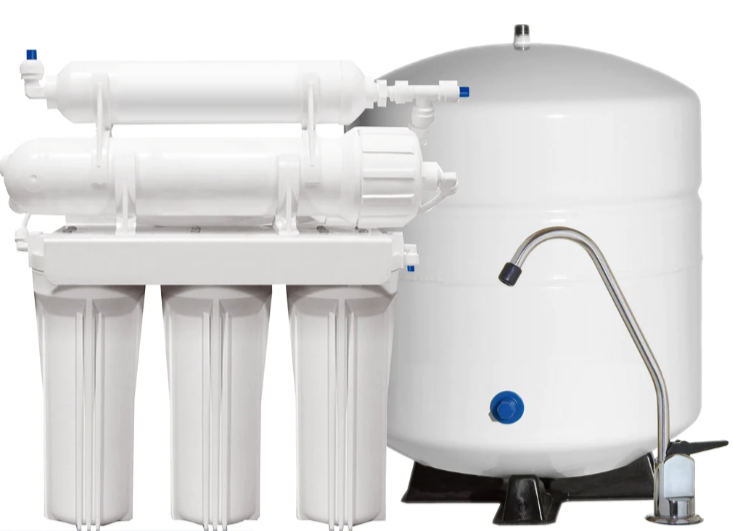
Pre-Filtration Stage
Prior to entering the reverse osmosis membrane, the water goes through pre-filtration, removing sediments, chlorine, and other larger particles.
Pressurization and Membrane Separation
Water under pressure is forced against the semipermeable membrane, separating impurities from the purified water.
Post-Filtration and Storage
After passing through the reverse osmosis membrane, the purified water goes through a post-filtration stage and is stored in a clean storage tank.
Benefits of Reverse Osmosis Systems
- Removes various contaminants, including heavy metals, salts, bacteria, and viruses.
- Improves the taste, odor, and appearance of water.
- Provides a reliable source of clean drinking water.
Conclusion
Reverse osmosis systems use a semipermeable membrane and pressure to purify water, removing impurities and producing clean drinking water.
💧 = Use the coupon code SALEG3P800 to save $150 OFF on the 800GPD Tankless RO System with UV Sterilizing Light – Waterdrop G3P800 = 💧
Category – Reverse osmosis and filters