





Contents
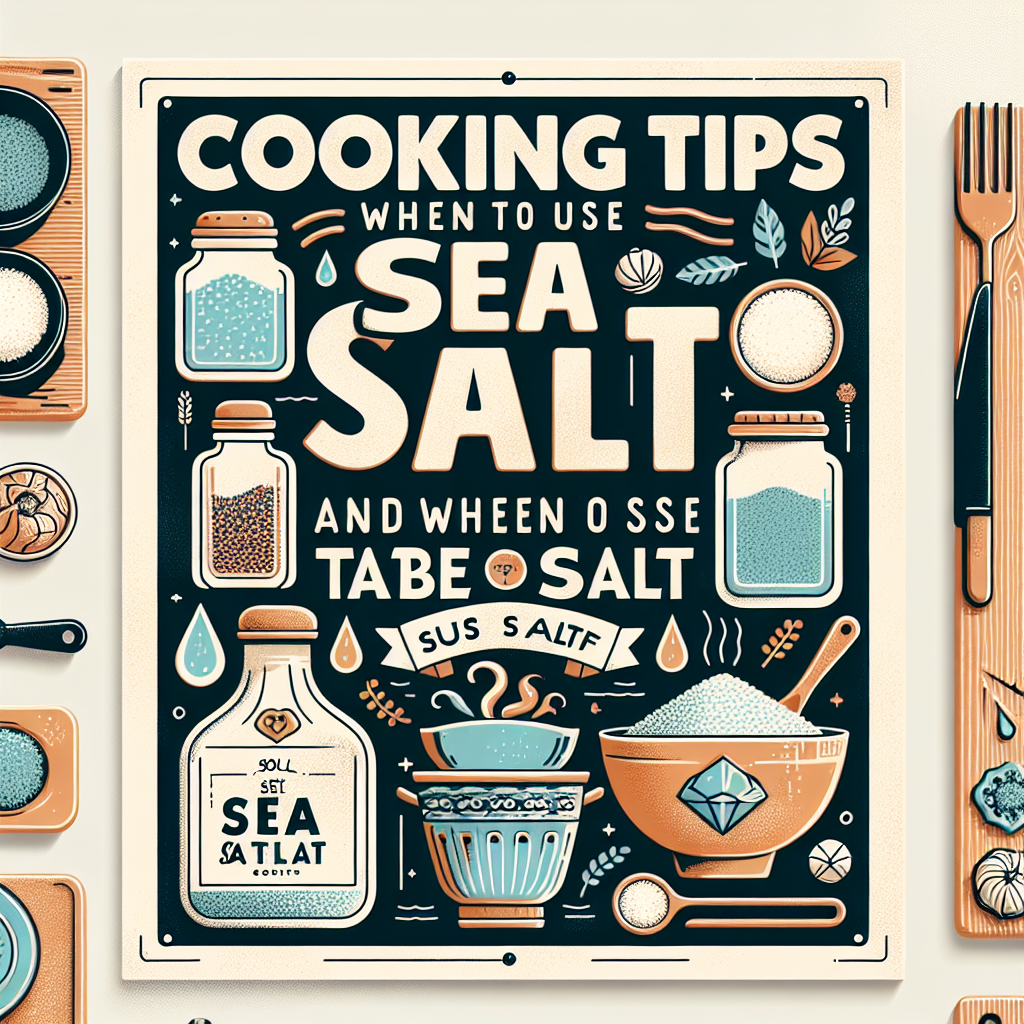
Cooking Tips: When to Use Sea Salt and When to Use Table Salt
Understanding the difference between sea salt and table salt is essential for elevating your culinary skills. Both types of salt enhance flavor, but they come from different sources and have distinct textures and tastes. Sea salt, harvested from evaporated seawater, usually has larger grains and can add a pleasant crunch to dishes. In contrast, table salt is more finely ground, often iodized, and is ideal for everyday cooking and baking.
This guide will help you discern when to choose each type of salt to maximize flavor and texture in your recipes. Whether you’re seasoning meats, baking pastries, or finishing a dish, knowing the right salt to use can make all the difference.

The Basics of Salt
Salt is an essential ingredient in cooking that enhances flavor, acts as a preservative, and plays a key role in food texture. Understanding the differences between sea salt and table salt can help you improve your cooking skills.
What is Sea Salt?
Sea salt is produced through the evaporation of seawater and often retains trace minerals, providing a distinctive flavor. Different varieties of sea salt include:
- Fleur de sel
- Himalayan pink salt
- Sel gris
What is Table Salt?
Table salt is mined from underground salt deposits and is usually refined to eliminate minerals. It also often contains additives like anti-caking agents. Most table salt has a strong, concentrated salty flavor.
When to Use Sea Salt
Sea salt is versatile and can be used in various cooking scenarios:
Finishing Touch
Sea salt’s coarse texture makes it ideal for finishing dishes. Sprinkling it on top of finished meals can add a burst of flavor.
Grilled Meats and Vegetables
The large crystals of sea salt can adhere well to grilled meats and vegetables, enhancing their flavor and texture during cooking.
Salads and Dressings
Use sea salt in dressings and salads to give a pop of flavor. Its unique mineral content can elevate simple vegetable dishes.
When to Use Table Salt
Table salt has its own specific uses in the kitchen:
Baking
In baking, it’s often best to use table salt for precise measurements. It dissolves quickly into mixtures, ensuring even distribution.
Cooking Basics
Use table salt for boiling water (like pasta or grains) since it dissolves quickly and helps to enhance the flavor during cooking.
Consistent Flavor
When a recipe calls for “salt” without specifications, it usually means table salt. Its predictable flavor profile makes it reliable.
Comparing the Two
| Feature | Sea Salt | Table Salt |
|---|---|---|
| Texture | Coarse and flaky | Fine and granular |
| Flavor | Mineral-rich | Purely salty |
| Uses | Finishing, seasoning | Baking, cooking |
| Processing | Minimal refinement | Highly refined |
Conclusion
Both sea salt and table salt have their places in the kitchen. Understanding their unique properties can enhance your culinary creations. For more details, you may check out Food Network.
FAQs on Cooking Tips: Sea Salt vs. Table Salt
What is the main difference between sea salt and table salt?
Sea salt is harvested from evaporated seawater and often contains trace minerals, which can add flavor. Table salt, on the other hand, is mined from salt deposits and usually has added iodine and anti-caking agents.
When should I use sea salt in cooking?
Use sea salt when you want a more complex flavor in your dishes. It’s ideal for seasoning meats, vegetables, and seafood, as well as finishing dishes for a burst of flavor.
When is it appropriate to use table salt?
Table salt is best for baking and any recipes that require precise measurements, as its fine grains dissolve quickly and uniformly. It’s also suitable for everyday seasoning during cooking.
Can I substitute one for the other?
Yes, you can substitute, but be mindful of the grain size. Sea salt grains are usually larger than table salt grains, so you may need to adjust the quantity for equivalent seasoning strength.
How should I store sea salt and table salt?
Store both types of salt in a cool, dry place. Keep sea salt in a closed container to prevent moisture absorption, while table salt can be kept in its original packaging or a sealed container.

Differences in Texture and Flavor
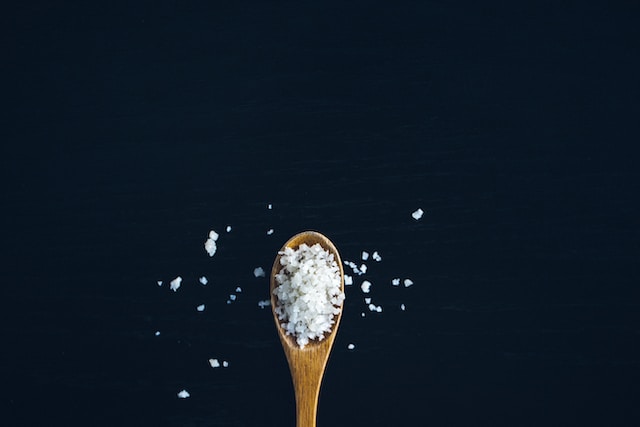
Sea salt is typically coarser than table salt, which can impact the flavor and texture of dishes. The larger crystals of sea salt provide a crunchy texture, while table salt tends to dissolve quickly, offering a more uniform taste.
The Impact on Cooking
When cooking, the choice between sea salt and table salt can affect not just the taste but also the cooking process. Sea salt is often preferred in finishing dishes due to its unique texture and flavor bursts, while table salt is commonly used during cooking for its dissolvable nature.
Health Considerations
Sea salt is often marketed as a healthier alternative to table salt due to its trace minerals. However, both types contain similar sodium levels, and moderation is key. For detailed information, you can read more about salt on Wikipedia.
Use in Specific Recipes
Choosing the right type of salt can depend on the recipe. For example, baking typically requires precise measurements, so table salt might be more suitable, while grilling or sautéing can benefit from the bold flavors of sea salt.
Cooking Tips: When to Use Sea Salt and When to Use Table Salt
- Sea Salt: Coarser texture, often less processed, retains minerals.
- Use for: Finishing dishes, enhancing flavor, and garnishing.
- Flavor: Generally has a more complex taste due to mineral content.
- Table Salt: Finer texture, usually iodized, and more processed.
- Use for: Baking, cooking where precise measurements are crucial.
- Flavor: More uniform but less complex than sea salt.
- Conversion: 1 teaspoon of table salt is approximately equal to 1.5 teaspoons of sea salt.
- Storage: Both can absorb moisture; store in a cool, dry place.







